
New year, New Intentions: Navigating Post Holiday Blues
Welcome to a fresh start. January often brings renewed motivation, new goals, and a sense of possibility. But it can also bring emotional whiplash. After the lights and celebrations of the holidays fade, many people experience lower energy, sadness, or a sense of letdown.
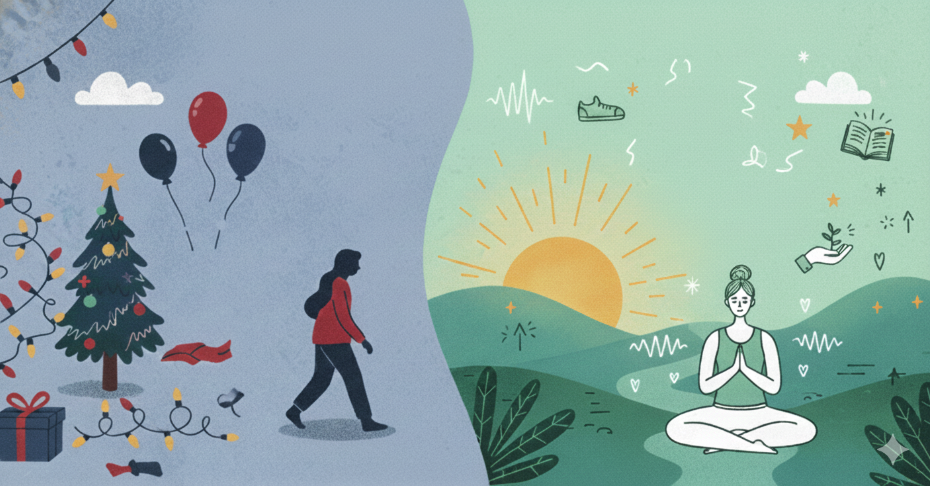
This month, we explore both sides of January: building healthy, sustainable resolutions—and understanding the very real experience of post-holiday blues.
The psychology of New Year’s resolutions.
Setting resolutions is more than a cultural tradition—it’s rooted in psychology. A new year acts as a temporal landmark, a mental reset point that helps us separate our “old self” from our “new self,” making change feel more achievable.
Why Fresh Starts Feel Powerful
Temporal landmarks give our brains permission to try again. They reduce emotional baggage from past attempts and increase optimism, which boosts motivation and follow-through.
Tips for resolutions that actually stick:
1. Start small and specific
Instead of “exercise more,” try:
Walk for 15 minutes, three times a week.
Specific goals are easier for your brain to remember and act on.
2. Focus on systems, not just outcomes
Want to read more? Design a system—like reading for five minutes before bed. Consistent habits create real change.
3. Expect imperfection
Missing a day doesn’t mean failure. In behavioral psychology, lapses are normal. What matters is returning to the habit quickly.
4. Choose values-aligned goals
Resolutions stick when they feel personally meaningful—not when they come from comparison or pressure.
5. Celebrate micro-successes
Every small win triggers dopamine, reinforcing behavior and boosting motivation.
Understanding Post-Holiday Blues
After weeks of social buzz, busy schedules, and bright decorations, it’s common to feel:
- Lower motivation
- Sadness or irritability
- Fatigue
- Loneliness
- A lingering sense of “now what?”
These feelings usually last a few days to a couple of weeks and are part of a normal adjustment period.
Why Post-Holiday Blues Happen
- Emotional contrast: The holidays bring heightened stimulation. January is quieter and more routine—the contrast can feel dramatic.
- Biological factors: Shorter daylight hours can affect serotonin and melatonin, shifting mood and energy.
- Social changes: After increased connection, returning to normal workloads or isolation can feel heavy.
- Financial or family stress: Holiday spending or unresolved conflicts may linger.
Healthy Ways to Navigate Post-Holiday Blues
- Re-introduce structure gently
Instead of jumping back to full-speed routines, ease yourself in. Small, predictable habits help stabilize mood. - Create January moments to look forward to
Plan a movie night, enjoy a winter walk, or meet a friend for breakfast. Future-oriented thinking reduces rumination. - Get outside—even for five minutes
Natural light (even on cloudy days) helps regulate mood and energy. - Practice self-compassion
You’re not being lazy—you’re transitioning. Talk to yourself the way you would talk to a friend. - Reflect on what actually worked during the holidays
Rather than focusing on what went wrong, identify what brought joy or meaning and carry that forward. - Reach out if you’re struggling
If feelings of sadness persist beyond a few weeks or interfere with daily life, consider speaking with a therapist or mental health professional.
Final Thoughts for January
Growth doesn’t come from drastic reinvention. It comes from gentle, consistent choices that honor who you already are.
As you step into the new year, remember: the goal isn’t perfection—it’s progress, connection, and kindness toward yourself.
A new year doesn’t make you new.
It reminds you of the wisdom and strength you already have.
— Dr. Joan Neehall, R. Psych (1579)